mmWave Radar Explained: How It Works and Where It's Used

mmWave radar is a sensing technology that uses millimeter-wavelength radio waves — mostly in the 24 GHz, 60 GHz, and 76–81 GHz bands — to measure an object's distance, speed, and angle, and to pick up tiny movements like a chest rising and falling. It works in the dark, sees through drywall, plastic, and clothing, and does not capture an image, which is why it has become the go-to sensor for touchless presence detection, in-cabin car safety, and contactless vital-sign monitoring. This guide explains the FMCW principle behind it, what each frequency band is actually used for, where mmWave radar shows up in real products, and which hobby modules are worth building with.
- How mmWave radar works: the FMCW principle
- What mmWave radar actually measures
- 24 GHz, 60 GHz, and 76–81 GHz: which band does what
- Hobby and DIY mmWave radar modules
- Where mmWave radar shows up today
- mmWave radar vs. PIR, cameras, and LiDAR
- Choosing an mmWave module for your project
- Frequently asked questions about mmWave radar
How mmWave radar works: the FMCW principle
Almost every modern mmWave radar sensor — from a low-cost hobby module to an automotive safety chip — uses Frequency-Modulated Continuous Wave (FMCW) radar. Instead of firing a single pulse and waiting for an echo, an FMCW radar continuously transmits a signal whose frequency sweeps up and down in a repeating pattern called a chirp. The receiver mixes the returning echo with a copy of the outgoing chirp, producing a "beat" frequency. That beat frequency is directly proportional to how long the signal took to travel to the target and back, which is what lets the radar compute range without needing to time individual pulses to nanosecond precision, according to Seeed Studio's mmWave radar sensor overview.
Because the radar keeps transmitting continuously rather than pulsing, it can also track how that beat frequency shifts from one chirp to the next — the Doppler effect — which gives it relative velocity directly, without comparing separate frames the way a camera-based system would. Add a second or third receive antenna and the radar can compare the phase of the same echo arriving at each antenna to estimate the target's angle. Combine range, velocity, and angle from many chirps per second and the radar can distinguish, track, and even coarsely image multiple targets in its field of view.
What mmWave radar actually measures
A single mmWave radar chirp cycle can extract several independent quantities from the same reflected signal:
- Range (distance): derived from the beat frequency between the transmitted and received chirp.
- Velocity: derived from the Doppler shift across consecutive chirps — this is instantaneous, unlike frame-to-frame velocity estimation on a camera.
- Angle (azimuth and, on multi-antenna designs, elevation): derived from the phase difference of the same echo across multiple receive antennas.
- Presence and micro-motion: even a stationary person produces a tiny periodic displacement from breathing and heartbeat. Because FMCW radar is sensitive to sub-millimeter movement, it can detect that someone is present and unmoving — something a passive-infrared (PIR) motion sensor cannot do — and, on purpose-built modules, extract a breathing or heart rate waveform.
Seeed Studio's own product line illustrates the trade-off well: its 24 GHz human-presence modules are rated for roughly 4 m of stationary "presence" range and 5–6 m of "motion" range with a 60°×60° to 90°×60° field of view, while its 60 GHz breathing-and-heartbeat module trades range (about 1.5 m of presence range) for the finer resolution needed to isolate a heartbeat-scale movement, per the frequency-band comparison table in Seeed's mmWave radar introduction. Those figures describe Seeed's own sensors specifically, not mmWave radar in general — automotive and industrial chips from other vendors are tuned for very different ranges.
24 GHz, 60 GHz, and 76–81 GHz: which band does what
"mmWave radar" is not one frequency — it is a family of bands, each suited to a different job:
| Band | Where it's used | Why |
|---|---|---|
| 24 GHz | Human presence and motion sensors (hobby modules, smart-home occupancy) | Longer detection range and stronger penetration through walls, plastic, and clothing than 60 GHz, per Seeed's comparison of its 24 GHz and 60 GHz sensor lines |
| 57–64 GHz ("60 GHz") | Fine motion sensing: fall detection, breathing/heartbeat monitoring, in-cabin automotive sensing, industrial motion detection | Weaker penetration but higher angular resolution than 24 GHz, which is what makes sub-millimeter movement detection practical (Seeed); Texas Instruments markets a dedicated single-chip 60 GHz automotive sensor line for in-cabin sensing, including child-presence detection aimed at Euro NCAP requirements |
| 76–81 GHz | Automotive exterior radar (long-range and imaging radar) | Texas Instruments' automotive mmWave portfolio is built specifically around 60 GHz and 77 GHz devices, with the 76–81 GHz band reserved for its automotive-grade single-chip radar sensors and imaging-radar systems |
Sources: Seeed Studio, "mmWave Radar Sensor Introduction"; Texas Instruments, "mmWave radar sensors" product overview.
Hobby and DIY mmWave radar modules
The most accessible entry point into mmWave radar is the Hi-Link HLK-LD2410 family and its many rebrands, which show up in Home Assistant projects, ESP32/Arduino builds, and Seeed's own XIAO ecosystem. These are simple, single-chip 24 GHz presence sensors: they output a serial (UART) data stream reporting whether a target is present, moving, or stationary, and at what distance, and most support a Bluetooth configuration app for tuning sensitivity zones without reflashing firmware, as documented in Seeed's guide to using the HLK-LD2410 with a XIAO board. More capable modules go further: some report the X/Y coordinates and trajectory of several people at once, and others add zone masking so the sensor ignores a doorway, a fan, or a pet.
A basic single-target presence module is the cheapest way to add occupancy detection to a project — a light that turns on when someone sits still at a desk, for example:
Disclosure: this article contains affiliate links. If you buy through them we may earn a small commission at no extra cost to you.
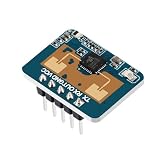
- The LD2410C is a high-sensitivity 24GHz human presence detection module utilizing FMCW (Frequency-Modulated Continuous Wave) technology to accurately detect human targets within a configured space
- By integrating radar signal processing with advanced human detection algorithms, the module enables highly sensitive presence monitoring while also calculating target distance and other auxiliary parameters
- Unlike conventional solutions, this LD2410C sensor can detect not only moving human bodies but also static, micro-motion, and seated/lying postures, ensuring superior detection capabilities
- With real-time detection and a fast response time, the LD2410C module offers a maximum sensing range of 5 meters and a distance resolution of 0.75 meters, ensuring reliable performance
- Featuring both GPIO and UART interfaces for plug-and-play operation, the module supports flexible deployment across various smart scenarios and end devices
If your project needs to tell how many people are in a room and roughly where they are, look for a module that reports per-target distance, angle, and trajectory rather than a single presence flag:

- LD2450 Ra·dar Module: A Trajectory Module, which can achieve real-time tracking of the position of the moving target in the detection area, and output the distance, angle and speed information of the moving target in the area through the serial port.
- Using Scenes: It is mainly used in common indoor scenes, such as home, office and hotel, to realize the positioning and tracking of moving people.
- Detection Angle : Azimuth ± 60° / Tilt ± 35°. Angle Accuracy : 2° ~ 20°.
- Detection Distance : Max Sensing Distance 8m. Distance Defense Rate : 0.75m. Distance Measurement Accuracy : 0.15m.
- Data Format : Serial ASCIl output. Modulation Mode: FMCW. Sweep Bandwidth: 250MHz (CE/FCC compliant). Frequency: 24G-24.25GHz.
- The Serial Port baud rate is 256000. 1 stop bit, no parity bit. Package: Default 1.5mmx4Pin Female.
For occupancy sensing that has to ignore known moving objects — a ceiling fan, a curtain, a monitor — a module with FMCW-based zone masking and multi-target XYZ tracking gives you more control than a basic presence sensor:

- 🧍 Human Presence Sensor (Motion + Stillness) – LD6004 mmWave radar human presence sensor detects motion, micro-motion, and stationary presence for true occupancy detection in rooms, offices, and smart spaces.
- 🎯 3-Target Tracking + XYZ Coordinates – Advanced FMCW radar module supports up to 3-person tracking and outputs x/y/z position coordinates for smarter automation logic and zone-based presence control.
- 🧩 Zone Partition & Masking (Anti-Interference) – Detection-zone partitioning with masked/blocked zones helps suppress interference inside/outside set areas, improving human presence detection accuracy in real rooms.
- 📏 Up to 6m Range + Wide Angle Coverage – Long 6m sensing range and wide detection angle (±60° H / ±60° V) makes this ceiling-mount presence sensor ideal for larger areas and open layouts.
- 🔧 UART Serial Protocol + GPIO Outputs – UART interface with provided protocol and configurable parameters, plus GPIO outputs, enables easy integration into controllers; compact 35×7mm module supports pin-header or SMT soldering.
Where mmWave radar shows up today
Automotive
Cars use mmWave radar in two very different spots. Inside the cabin, Texas Instruments' 60 GHz single-chip radar sensors are built for low-power occupant and child-presence sensing — a use case driven in part by Euro NCAP testing requirements for detecting a child left in a vehicle, according to TI's own mmWave radar product materials. Outside the cabin, TI's 76–81 GHz automotive-grade chips (its AWR and AWRL device families) target longer-range and imaging radar for driver-assistance and autonomous-driving stacks. Because radar alone reports sparse detections rather than a full 3D shape, it is normally paired with a camera and, in higher-end systems, LiDAR — see our LiDAR vs radar comparison for how those two sensors complement each other and where each one wins.
Smart home and building automation
In residential and commercial buildings, 24 GHz presence modules drive occupancy-based lighting and HVAC control, and — because they measure micro-motion instead of relying on infrared heat contrast the way a PIR sensor does — they can keep a light on for someone sitting still, which PIR-based occupancy sensors routinely fail to do. Seeed Studio also lists gesture recognition among the "Smart Home Devices" use cases for its radar sensors, alongside presence detection and touchless vital-sign monitoring.
Industrial automation
On a factory floor, mmWave radar is used for "monitoring machinery, detecting human presence in hazardous areas, and improving safety in automated environments," per Seeed Studio's list of typical mmWave application scenarios. Texas Instruments sells a dedicated line of industrial mmWave radar sensors (its IWR and IWRL device families, in the 57–64 GHz band) alongside its automotive parts, aimed at low-power motion and presence sensing for exactly these kinds of industrial deployments.
Healthcare and wellness
Because FMCW radar can resolve sub-millimeter chest movement, it is used for contactless monitoring of breathing and heart rate, fall detection, and sleep-quality tracking — Seeed's own product line includes dedicated 60 GHz breathing/heartbeat and fall-detection modules built for exactly this. The appeal over a camera-based system is privacy: the radar reports motion and distance data, not an identifiable image, so it can be deployed in a bedroom or bathroom without a lens pointed at the occupant.
Drones and robotics
On drones, compact radar altimeters and collision-avoidance units give reliable distance and closing-speed readings for obstacle avoidance and precision landing, complementing vision-based navigation in conditions — dust, low light, glare — where cameras alone struggle. Seeed lists autonomous navigation and obstacle avoidance among the use cases for its mmWave sensors in exactly this context.
mmWave radar vs. PIR, cameras, and LiDAR
The natural competitor to a cheap mmWave presence module is an even cheaper PIR (passive infrared) motion sensor — but PIR only detects a change in heat signature, so it cannot tell that a person is present once they stop moving, and it cannot measure distance, angle, or velocity at all. mmWave radar solves both problems by measuring reflected radio energy rather than passive heat, at the cost of a more complex (and typically pricier) sensor.
Against a camera, mmWave radar trades resolution for privacy and lighting independence: it works in total darkness, does not capture an identifiable image, and is largely unaffected by the glare, shadows, or steam that confuse a computer-vision pipeline — but it cannot recognize faces, read text, or classify what kind of object it detected, only where it is and how it's moving.
Against LiDAR, the comparison is closer to complementary than competitive. LiDAR's much shorter wavelength gives it dense, precise 3D point clouds, while radar's longer millimeter wavelength gives it direct velocity measurement and far better performance through rain, fog, dust, and thin solid materials. Our full LiDAR vs radar guide breaks down that trade-off in detail. In systems that need both precision and robustness — autonomous vehicles, warehouse robots, drones — designers increasingly fuse radar with LiDAR, cameras, and IMU data using techniques like Kalman filtering, which we cover in our guide to sensor fusion algorithms, rather than picking a single sensor and hoping its blind spots never matter.
If you want a general-purpose presence and motion sensor for a smart-home or maker project and don't need the multi-target detail of the modules above, one of the general-purpose modules below can be a reasonable starting point — just confirm the listing states the operating frequency and detection range before you buy:

- LD2410C is a highly sensitive 24GHz human presence detection module. It operates using FMCW (Frequency-Modulated Continuous Wave) technology to detect human targets within the configured space
- By integrating radar signal processing with advanced human detection algorithms, the module enables highly sensitive presence monitoring while also calculating target distance and other auxiliary parameters
- Unlike conventional solutions, this LD2410C sensor can detect not only moving human bodies but also static, micro-motion, and seated/lying postures, ensuring superior detection capabilities
- With real-time detection and a fast response time, the LD2410C module offers a maximum sensing range of 5 meters and a distance resolution of 0.75 meters, ensuring reliable performance
- Featuring both GPIO and UART interfaces for plug-and-play operation, the module supports flexible deployment across various smart scenarios and end devices

- Innovative Precision for Your Safety: Equipped with advanced LD2420 24GHz mmWave radar sensor technology, this smart sensor module stands out in human micro-motion detection, offering unparalleled precision in sensing presence within 8 meters. This makes it perfect for high-risk area protection, ensuring safety with cutting-edge tech
- Versatile Applications, Seamless Integration: Whether it's for smart lighting control, appliance sensing, or integrating into smart home systems, this millimeter wave radar detection sensor module is designed to adapt. Its support for both GPIO and UART interfaces ensures easy incorporation into your existing setups, offering flexibility without compromise
- Cutting-edge Technology for Everyday Use: Utilizing millimeter wave radar distance measuring and the advanced proprietary signal processing technologies of the S3 series chips, this sensor excels in detecting human movements, slight motions, and even stationary presence. It redefines what smart sensors can do in everyday applications, from intelligent appliances to energy-efficient lighting solutions
- Easy Installation, Durable Design: Crafted from high-quality polymer materials, this 24G human presence sensing radar module is not only durable but also offers versatile installation options. It can be easily mounted on ceilings or walls, fitting seamlessly into any space or setting while providing constant and reliable detection
- Revolutionize Your Space with Smart Sensing: Transform how your spaces interact with human presence. Whether it's for enhancing security in critical areas or creating more intuitive and efficient home environments, this LD2420 radar sensor module opens up new possibilities for intelligent space management and automation, making every movement and presence count

- High performance Rd-03D 24G radar sensor module with multi-target human motion trajectory localization and tracking, featuring 8m detection range and 0.75m distance resolution for precise target positioning and tracking
- Easily integrate the radar module into various applications such as smart homes, smart businesses, bathrooms, and smart lighting, thanks to its compact size of 15*44mm and the convenience of automatic default configuration loading
- Support 24GHz ISM frequency band and provide accurate detection with a detection range of ±60° azimuth angle and ±30° elevation angle, making it ideal for smart home, smart business, bathroom, and smart lighting applications
- Onboard PCB antenna and high-performance microstrip antenna for high detection accuracy and the ability to support UART for smart radar tuning via serial communication, providing quick and convenient operation
- The radar module comes with a 5V single power supply and offers a visual tool for configuring tracking detection range, data reporting interval, and target retention time, ensuring a seamless and efficient user experience
Choosing an mmWave module for your project
For a first project, start with the simplest module that reports the data you actually need: a basic presence/motion flag is enough for lighting or occupancy automation, while trajectory or multi-target output is only worth the extra complexity if your project genuinely needs to count or locate more than one person. Most of these UART-based modules are lightweight enough to run alongside other sensors on a microcontroller, and if your project is pairing radar with a camera or running any on-device inference, our guide to Raspberry Pi AI kits covers the accelerator boards that make that combination practical without offloading everything to the cloud.
Frequently asked questions about mmWave radar
What is mmWave radar?
mmWave radar is a sensing technology that transmits and receives millimeter-wavelength radio waves — typically in the 24 GHz, 60 GHz, or 76–81 GHz bands — to measure a target's distance, velocity, and angle, and to detect tiny movements like breathing. You may also have seen "mmWave" used for 5G cellular networks, which use a similar slice of spectrum for high-speed data transmission rather than sensing; that is a different application and not what this guide covers.
How is mmWave radar different from LiDAR?
Both measure distance by timing a reflected wave, but LiDAR uses near-infrared laser light and mmWave radar uses radio waves thousands of times longer in wavelength. That difference gives LiDAR much finer spatial resolution and gives radar direct velocity measurement plus far better performance in rain, fog, dust, and through some solid materials. See our LiDAR vs radar comparison for the full breakdown.
What is the effective range of a hobbyist mmWave radar module?
It varies by product and frequency. Seeed Studio's own 24 GHz presence modules are specified for roughly 4 meters of stationary presence range and 5–6 meters of motion range, while its 60 GHz breathing/heartbeat module is specified for a shorter presence range of about 1.5 meters in exchange for finer motion resolution. Always check the specific module's datasheet rather than assuming one figure applies to every mmWave sensor.
What are the drawbacks of mmWave radar?
Compared with a simple PIR motion sensor, mmWave radar modules are more complex and can be more sensitive to interference from other moving objects in their field of view — fans, curtains, pets — which is why better modules include configurable zone masking. Compared with a camera, radar cannot identify what an object is, only where it is and how fast it's moving. And within mmWave itself, higher frequencies like 60 GHz trade detection range and penetration for finer resolution, per Seeed's comparison of its own 24 GHz and 60 GHz sensor lines.
How much does an mmWave radar sensor cost?
Cost varies enormously by category rather than sitting at one price point: bare hobbyist presence modules are inexpensive commodity boards, while automotive-grade single-chip radar ICs and complete imaging-radar systems sit at the other end of the market entirely. Check current listings and the manufacturer's own pricing pages for a given part rather than relying on a general figure.
Can mmWave radar detect breathing or heart rate?
Yes. Because FMCW radar can resolve movement on the sub-millimeter scale, purpose-built modules — such as Seeed Studio's 60 GHz breathing-and-heartbeat sensor — extract a breathing or heart-rate waveform from the chest's periodic motion without any physical contact.
Want the bigger picture? Start with our pillar guide, What is sensor fusion? A complete guide, then see how mmWave radar stacks up against the other range-finding sensor in our LiDAR vs radar guide.
Last update 2026-10-01. Price and product availability may change.
Recommended: