Raspberry Pi AI HAT+ vs NVIDIA Jetson: Which Edge AI Platform Should You Buy?
Short answer: buy the Raspberry Pi 5 + AI HAT+ if you want cheap, low-power computer vision on compiled models; buy the NVIDIA Jetson Orin Nano Super if you need CUDA flexibility, local LLMs or serious robotics. The two boards are often cross-shopped, but they solve different problems: the AI HAT+ is a fixed-function inference accelerator (13 or 26 TOPS on a Hailo chip) bolted onto a Raspberry Pi 5, while the Jetson is a self-contained GPU computer (67 TOPS) that runs almost anything the NVIDIA ecosystem runs. This guide compares architecture, software, real-world capabilities, power and price — and gives a verdict per user profile.
Disclosure: this article contains affiliate links. If you buy through them we may earn a small commission at no extra cost to you.
- Raspberry Pi AI HAT+ vs Jetson Orin Nano: comparison table
- Two very different architectures
- Raspberry Pi 5 + AI HAT+: cheap, efficient, compiled
- NVIDIA Jetson Orin Nano Super: a small CUDA workstation
- Software stack: model zoo vs open ecosystem
- Power consumption and real cost
- Verdict: which one should you buy?
- FAQ: Raspberry Pi AI HAT+ vs Jetson
Raspberry Pi AI HAT+ vs Jetson Orin Nano: comparison table
Here is the head-to-head summary. Prices are approximate street prices at the time of writing — always verify current pricing before you buy.
| Dimension | Raspberry Pi 5 + AI HAT+ | Jetson Orin Nano Super |
|---|---|---|
| AI performance | 13 TOPS (Hailo-8L) or 26 TOPS (Hailo-8), INT8 | Up to 67 TOPS (INT8, sparse) |
| Accelerator type | Dedicated dataflow NPU (models must be compiled) | 1,024-core Ampere GPU + 32 tensor cores (general-purpose CUDA) |
| CPU | Quad-core Cortex-A76 @ 2.4 GHz (Pi 5) | 6-core Cortex-A78AE @ 1.7 GHz |
| Memory for AI | Uses Pi system RAM (up to 16 GB); NPU has on-chip memory only | 8 GB LPDDR5 @ 102 GB/s, shared CPU/GPU |
| Software stack | Raspberry Pi OS + HailoRT, Dataflow Compiler, rpicam-apps integration | Ubuntu + JetPack: CUDA, TensorRT, cuDNN, DeepStream, Isaac ROS |
| Model support | Pre-compiled model zoo (YOLO, pose, segmentation); custom models need compilation to HEF | Almost anything: PyTorch, ONNX, TensorRT, llama.cpp/Ollama LLMs |
| Local LLMs | No (NPU not designed for it; LLMs fall back to CPU, slowly) | Yes — 3B–8B models at usable speeds |
| Typical power | ~5–10 W total system | 7–25 W configurable |
| Approx. price | Pi 5 + HAT+ + accessories — check current price before buying | Dev kit — check current price before buying |
| Best for | Vision projects, smart cameras, low-power 24/7 inference | LLMs, robotics, multi-model pipelines, CUDA development |
Two very different architectures
The most important thing to understand is that these are not two versions of the same idea. They represent opposite philosophies of edge AI hardware design.
The AI HAT+ is an add-on board for the Raspberry Pi 5 that carries a Hailo accelerator — the Hailo-8L (13 TOPS) on the cheaper variant, the full Hailo-8 (26 TOPS) on the 26-TOPS version. Hailo chips are dataflow NPUs: instead of a general-purpose GPU executing kernels, the neural network is compiled ahead of time into a hardware configuration that streams data through fixed compute elements. The result is spectacular efficiency — a couple of watts for real-time object detection — but zero flexibility at runtime. If your model hasn't been compiled for the Hailo architecture, it doesn't run on the NPU, full stop.
The Jetson Orin Nano Super is a complete single-board computer built around an Ampere-generation GPU with 1,024 CUDA cores and 32 tensor cores, paired with a 6-core Arm CPU and 8 GB of fast LPDDR5 shared memory. It is, in effect, a tiny CUDA workstation. Anything written for NVIDIA GPUs — PyTorch, TensorRT, DeepStream, llama.cpp — runs on it with little or no modification. The "Super" firmware update raised the power ceiling to 25 W and boosted claimed performance to 67 TOPS, and NVIDIA cut the dev kit price at the same time, which is what made this comparison genuinely competitive.
On paper 67 TOPS beats 26 TOPS, but TOPS across different architectures are not directly comparable. For a single compiled vision model, the Hailo-8 delivers frames-per-second remarkably close to the Jetson at a fraction of the power. The Jetson pulls ahead the moment you leave that narrow lane: bigger models, multiple concurrent models, transformer architectures, anything not in Hailo's model zoo.
Raspberry Pi 5 + AI HAT+: cheap, efficient, compiled
The AI HAT+ connects to the Pi 5's PCIe 2.0/3.0 interface and integrates tightly with the official camera stack: rpicam-apps post-processing stages can run Hailo inference directly on the camera feed, which makes a Pi 5 + AI HAT+ + Camera Module arguably the fastest path to a working smart camera you can build today.
What it does brilliantly:
- Real-time object detection (YOLOv8/YOLO11 variants) at 30+ fps on the 26-TOPS model.
- Pose estimation, instance segmentation and face detection from the pre-compiled Hailo model zoo.
- 24/7 always-on inference at ~5–10 W total system power — fine for passive cooling in an enclosure with airflow, and cheap to run forever.
- Everything else a Raspberry Pi does: GPIO, HATs, a huge community, and the general-purpose usefulness we cover in our Raspberry Pi 5 project ideas guide.
What it can't do: run arbitrary models. Custom networks must go through the Hailo Dataflow Compiler (ONNX → HEF), which involves quantization and a real learning curve; some architectures simply won't map to the hardware. There is no CUDA, no PyTorch-on-NPU, and no meaningful local LLM story — a language model will run on the Pi's CPU, slowly, with the NPU idle. Memory is also a constraint: the NPU works from its own on-chip memory, so very large vision models are out of reach regardless of how much RAM your Pi has.
If you want to see current market options for the HAT+ and bundled kits, these are the Amazon bestsellers right now:
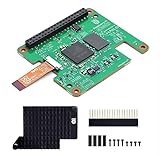
- Hailo-10H AI accelerator delivering 40 TOPS (INT4) inferencing performance.
- Performance for computer vision models comparable to the Raspbery Pi AI HAT+ (26 TOPS).
- Runs generative AI models efficiently using 8GB on-board RAM.
- Fully integrated into Raspbery Pi’s camera software stack.
- Conforms to Raspbery Pi HAT+ specification.
- Operating temperature: 0°C to 50°C (ambient).

- This kit includes an AI HAT+, a metal case and an active cooler. It's compatible with Raspberry Pi 5.
- The Raspberry Pi AI HAT+ features a built-in neural network accelerator, turning your Raspberry Pi 5 into a high-performance, accessible, and power-efficient AI machine.The 13 TOPS variant capably runs neural networks for applications including object detection, semantic and instance segmentation, pose estimation, and more.
- The AI HAT+ communicates using Raspberry Pi 5’s PCIe Gen 3 interface. When the host Raspberry Pi 5 is running an up-to-date Raspberry Pi OS image, it automatically detects the on-board Hailo accelerator and makes the NPU available for AI computing tasks. The built-in rpicam-apps camera applications in Raspberry Pi OS natively support the AI module, automatically using the NPU to run compatible post-processing tasks.
- Conforms to Raspberry Pi HAT+ specification; Supplied with 16mm stacking header, spacers, and screws to enable fitting on Raspberry Pi 5 with Raspberry Pi Active Cooler in place.
- The metal case can protect the Raspberry Pi 5 board from damage, dust and scratches. It can access most ports, including usb-c power jack, micro HDMI ports, usb ports, Ethernet jack, sd card slot, power button and GPIO port.
- Active Cooler combines an aluminium heatsink with a PWM fan to keep your Raspberry Pi 5 maintain optimal operating temperatures, ensuring reliable performance for various applications.
For a broader look at complete bundles — cases, cameras, storage — see our roundup of the best Raspberry Pi AI kits.
NVIDIA Jetson Orin Nano Super: a small CUDA workstation
The Orin Nano Super dev kit is what you buy when you want the NVIDIA software ecosystem in an edge-sized box. We cover the board in depth in our dedicated Jetson Orin Nano guide; the short version:
- CUDA and TensorRT. The same programming model as desktop and datacenter NVIDIA GPUs. Prototype on your PC, deploy to the Jetson with minor changes.
- Local LLMs. 8 GB of unified memory at 102 GB/s is enough to run quantized 3B–8B models (Llama, Qwen, Gemma classes) at conversational speeds via Ollama or llama.cpp. This is the single biggest capability gap versus the Pi: on the Jetson, a fully local voice assistant or RAG demo is a weekend project.
- Multi-model pipelines. DeepStream handles several video streams with detection + tracking + classification running concurrently — the kind of workload that saturates a fixed-function NPU immediately.
- Robotics. Isaac ROS gives you GPU-accelerated ROS 2 packages for visual SLAM, depth estimation and manipulation. Nothing comparable exists on the Pi side.
What it can't do, or does worse: it costs more once you add storage (you'll want an NVMe SSD — running JetPack from microSD is painful), it idles hotter and higher than a Pi, the GPIO/HAT ecosystem is far smaller, and JetPack ties you to NVIDIA's L4T Ubuntu builds, which historically lag upstream Ubuntu releases. It is also simply more computer than many vision projects need: paying for 67 TOPS and 15–25 W to run one YOLO model on one camera is overkill.
Software stack: model zoo vs open ecosystem
Day-to-day, the software experience is where the two platforms feel most different.
Hailo/Pi workflow: install HailoRT and the hailo-all packages on Raspberry Pi OS, pick a pre-compiled .hef model from the zoo, and wire it into a GStreamer or rpicam pipeline. Within the zoo's boundaries this is genuinely easy — Raspberry Pi's documentation is excellent (official AI HAT+ docs). Outside the zoo, you enter Dataflow Compiler territory: dataset-calibrated quantization, layer compatibility checks, and a toolchain that assumes ML engineering experience.
Jetson workflow: flash JetPack, and you have Ubuntu with CUDA. From there it's the standard NVIDIA path — ONNX export, TensorRT optimization for production, or just running PyTorch directly while you iterate. NVIDIA's Jetson developer resources and jetson-containers project provide prebuilt Docker images for LLMs, vision-language models and diffusion models. The learning curve is broader but the ceiling is dramatically higher, and skills transfer directly to cloud GPUs.
Power consumption and real cost
Power: a Pi 5 with the AI HAT+ under sustained inference load typically draws ~5–10 W total. The Jetson Orin Nano Super is configurable between 7 W and 25 W, and you need the upper modes to see "Super" performance. For battery or solar deployments, the Hailo route is the clear winner; over a year of 24/7 operation the difference also shows up (modestly) on your electricity bill.
Price (approximate — verify before buying):
- Pi route: Pi 5 8 GB + AI HAT+ (13 TOPS or 26 TOPS) + PSU/SD/cooler — check current prices before buying.
- Jetson route: Orin Nano Super dev kit + NVMe SSD — check current prices before buying. Note that dev kit availability and pricing fluctuate; street prices sometimes sit above MSRP.
The gap between a well-equipped build on each side is real but smaller than it first appears. That means the decision should be driven by capability fit, not by sticker price.
Verdict: which one should you buy?
Hobbyist doing computer vision (cameras, detection, pets, birds, security): buy the Pi 5 + AI HAT+. The camera integration is unmatched, the model zoo covers 90% of hobbyist use cases, power draw is trivial, and you keep the entire Pi ecosystem. Get the 26-TOPS version if the budget allows; the headroom is worth it.
You want local LLMs, chatbots or generative AI at the edge: buy the Jetson Orin Nano Super. This isn't close — the Hailo NPU cannot run language models, and the Pi's CPU alone is not a pleasant LLM experience. The Jetson's 8 GB of fast unified memory plus CUDA support for Ollama/llama.cpp makes it the cheapest sensible local-LLM edge box today.
Robotics: Jetson, in almost every case. Isaac ROS, GPU-accelerated SLAM and the ability to run perception + planning models concurrently are decisive. The Pi + Hailo combo works for simple line-following or single-camera detection robots, but you'll outgrow it fast.
Production / commercial deployment: it depends on the workload. For a fixed, well-defined vision task replicated across many units, the Hailo route wins on unit cost and power — that's exactly what the chip was designed for. For evolving workloads, multi-stream video analytics, or anything with a transformer in it, standardize on Jetson and NVIDIA's long-term support lifecycle.
Still undecided? If you can only buy one board and you're not sure what you'll build, the Jetson's flexibility is the safer default; if you already own a Pi 5, the HAT+ is a straightforward way to add real AI capability to hardware you already have.
FAQ: Raspberry Pi AI HAT+ vs Jetson
Can the Raspberry Pi AI HAT+ run LLMs like Llama or Qwen?
No, not on the NPU. The Hailo-8/8L is a vision-oriented dataflow accelerator; language models don't map to its architecture. You can run small quantized LLMs on the Pi 5's CPU, but expect only a few tokens per second. For local LLMs at the edge, the Jetson Orin Nano Super is the right tool.
Is 67 TOPS on the Jetson really 2.5x faster than the 26 TOPS Hailo-8?
Not for a single compiled vision model — TOPS figures across different architectures aren't directly comparable, and the Hailo-8 achieves similar YOLO frame rates at far lower power. The Jetson's advantage appears with large models, transformers, multiple concurrent streams and any workload outside Hailo's model zoo.
Which platform is better for a beginner?
The Raspberry Pi. It's cheaper, the documentation and community are larger, and the pre-compiled model zoo means you can have live object detection running in under an hour without touching a compiler. The Jetson rewards users who already know (or want to learn) the CUDA/Linux toolchain.
Do I need the 26 TOPS AI HAT+ or is the 13 TOPS version enough?
For a single 1080p detection stream with standard YOLO models, 13 TOPS is enough. Choose 26 TOPS if you want higher resolutions, larger model variants, multiple models in sequence, or simply headroom — the price difference is small relative to the total build cost.
Last update 2026-10-04. Price and product availability may change.
Recommended: