iPhone LiDAR Sensor: What It Does and Which Models Have It
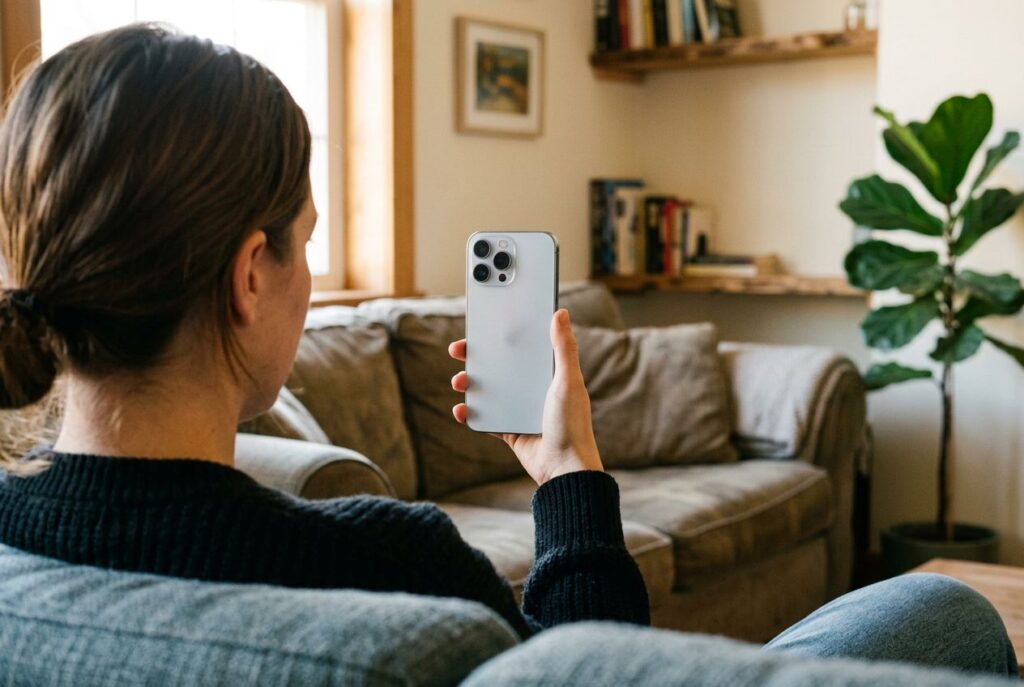
The LiDAR Scanner is a small time-of-flight sensor built into the rear camera cluster of every iPhone Pro and Pro Max since the iPhone 12 Pro, and every iPad Pro since 2020. It measures distance by timing laser pulses, not by the spinning or solid-state hardware used in cars and robots, and Apple states it works up to about 5 meters. On iPhone it exists to speed up autofocus in low light, power Night mode portraits, sharpen the Measure app, and feed real-world depth data to augmented-reality and 3D-scanning apps.
Which iPhone and iPad models have a LiDAR Scanner
Apple introduced the LiDAR Scanner on the iPad Pro in March 2020, then brought it to phones seven months later. According to Apple's own product announcement (October 13, 2020), the iPhone 12 Pro and iPhone 12 Pro Max were the first iPhones to include it, and it has stayed a Pro-exclusive feature ever since: Apple's current iPhone 18 Pro and 18 Pro Max technical specifications still list a "LiDAR Scanner" under the Sensors section, alongside Face ID and the barometer.
The same pattern holds on tablets. Apple's current iPad Pro specifications list a LiDAR Scanner, while the specifications pages for the iPad Air, the standard iPad, and the iPad mini do not mention it at all. In other words: on iPad, only the Pro line has ever had it, and on iPhone, the non-Pro models — including the current iPhone 18 and iPhone Air — have never had it either, based on Apple's published specifications for those devices.
So the short version: if your iPhone is a "Pro" or "Pro Max" model from the iPhone 12 Pro onward, it has a LiDAR Scanner. If it's a standard iPhone, an iPhone Air, or an iPhone mini/SE-type model, it does not. On iPad, only the iPad Pro line qualifies.
How the iPhone LiDAR Scanner works
Apple's LiDAR Scanner is a direct time-of-flight sensor: it fires a laser pulse and measures exactly how long the reflection takes to come back, then converts that time into a distance. Apple's official description of the launch hardware says the scanner "measures the distance to surrounding objects up to 5 meters away, works both indoors and outdoors, and operates at the photon level at nano-second speeds."
A peer-reviewed teardown and field test of the first-generation hardware, published in Scientific Reports (Nature), adds detail Apple doesn't publish itself. According to that study, the sensor's laser emitter (a VCSEL, or vertical-cavity surface-emitting laser) fires an 8×8 array of beams that gets diffracted into a 3×3 grid, producing 576 measurement points per scan, timed by a single-photon avalanche photodiode (SPAD) receiver. The same study found the scanner's usable point density drops sharply with distance — roughly 7,225 points per square meter at 25 cm away, versus about 150 points per square meter at 250 cm — which is why LiDAR-based scanning apps work best when you stay close to the object. It's worth noting this study examined the iPhone 12 Pro and 2020 iPad Pro specifically; Apple has not published equivalent hardware-level detail for later generations, so the exact point count and density on newer Pro models may differ.
What makes the feature useful in practice is not the raw sensor data by itself, but how iOS combines it. Apple's own description of the iPad Pro launch explains that the scanner's depth points are merged with data from the cameras and motion sensors, then processed by on-device computer vision — a textbook case of the kind of sensor fusion covered elsewhere on this site. The LiDAR data alone is sparse and short-range; fused with the camera image, it becomes precise enough to place a 3D object convincingly on a real table or measure a wall.
What the LiDAR Scanner actually does
Augmented reality and 3D scanning
This is the feature's original purpose. Apple's ARKit framework uses the LiDAR Scanner's depth map to place virtual objects on real surfaces instantly, without the slow "wave your phone around to detect a plane" step that camera-only AR required before 2020. Apple's developer documentation for RoomPlan — a Swift API built on ARKit — describes it as using "the camera and LiDAR Scanner on iPhone and iPad to create a 3D floor plan of a room, including key characteristics such as dimensions and types of furniture." Third-party apps use the same underlying data for object and room scanning, generating exportable 3D meshes rather than the photo-stitched models produced by photogrammetry-based scanning apps.
Faster autofocus and Night mode portraits
The LiDAR Scanner also does camera work that has nothing to do with AR. In Apple's press release announcing the iPhone 12 Pro, Greg Joswiak (Apple's SVP of Worldwide Marketing at the time) stated that "a state-of-the-art LiDAR Scanner means users can experience AR like never before, and also offers benefits to the camera with faster autofocus in low light and the introduction of Night mode portraits." In practice, the sensor gives the camera an instant distance reading in dark scenes, instead of the camera having to hunt for focus using contrast detection alone — which is also what makes Night mode portrait shots (a low-light depth-effect photo) possible in the first place.
The Measure app
Apple's LiDAR launch material also credits the sensor with a faster, more accurate Measure app: automatic person-height estimates, on-screen guides that snap to edges and vertical lines as you scan, and a Ruler View for finer measurements, with the ability to save a list of measurements alongside screenshots. None of this requires opening a specialized 3D-scanning app — it's built into the stock Measure app that ships with iOS.
How accurate is the iPhone's LiDAR Scanner?
The most detailed independent accuracy numbers come from the same Scientific Reports study, which tested an iPhone 12 Pro and a 2020 iPad Pro against a coastal cliff in Denmark, comparing the LiDAR scans to reference models built with drone photogrammetry. The reported results: small objects with a side length greater than 10 cm were modeled with an absolute accuracy of about ±1 cm, and a full 3D model of a cliff section measuring roughly 130 × 15 × 10 meters was reconstructed with an absolute accuracy of about ±10 cm.
Those numbers explain both the appeal and the ceiling of phone-based LiDAR scanning: it's precise at close range on small-to-mid-sized objects and surfaces, useful even at the scale of a cliff face when many overlapping scans are stitched together, but it is not survey-grade equipment and the researchers explicitly framed it as a cost-effective alternative to established remote-sensing techniques — not a replacement for them.
iPhone LiDAR vs. automotive and industrial LiDAR
Searching for "LiDAR sensor" often surfaces content about self-driving cars, drones, or warehouse robots — a completely different class of hardware built for a different job. The iPhone's chip and an automotive LiDAR unit share the same basic principle (timing a reflected pulse of light) and not much else.
| Aspect | iPhone/iPad LiDAR Scanner | Automotive & industrial LiDAR |
|---|---|---|
| Primary job | Depth data for AR, camera autofocus, and app-based 3D scanning | Real-time object detection and navigation for vehicles and robots |
| Stated range | Up to 5 meters (Apple's own specification) | Built for much longer detection distances — see our guide to LiDAR sensors for how those units are specified |
| Output | A few hundred points per scan, fused with the camera image | Dense point clouds, often fused with radar and cameras rather than a single phone-style camera |
| Where it sits | Behind the rear camera lens of an iPhone or iPad | External sensor units mounted on cars, drones, or robots |
| Can one do the other's job? | No — range, durability, and refresh rate aren't built for vehicle speeds | No — far too large, power-hungry, and expensive for a handheld camera feature |
If you're comparing the underlying technologies rather than the phone feature, our guide to LiDAR vs radar covers how those longer-range systems work and why vehicles increasingly pair LiDAR with radar rather than relying on either alone.
Frequently asked questions about the iPhone LiDAR sensor
Which iPhones have a LiDAR Scanner?
Every iPhone Pro and Pro Max model starting with the iPhone 12 Pro and iPhone 12 Pro Max in 2020, based on Apple's product announcements and current technical specifications. Standard (non-Pro) iPhone models, including the iPhone Air, have never included it according to Apple's published specs.
What LiDAR sensor is inside the iPhone?
Apple calls it the "LiDAR Scanner" in its own specifications and doesn't publicly name a chip supplier. Independent testing of the original hardware (in the Scientific Reports study cited above) found it uses a VCSEL laser emitter and a SPAD receiver to perform direct time-of-flight measurements — the same basic technique used in longer-range LiDAR, just at much shorter range and lower point count.
How do you use the LiDAR Scanner on an iPhone?
There's no dedicated on/off switch or settings toggle for it. It works automatically whenever an app requests depth data: ARKit-based augmented-reality apps, 3D-scanning and room-scanning apps like those built on RoomPlan, and the built-in Measure app all call on it without any manual setup. It also engages automatically for autofocus and Night mode portraits in low light, based on Apple's own description of those camera features.
Is the iPhone's LiDAR Scanner the same technology as automotive LiDAR?
It's the same basic operating principle — timing a reflected laser pulse — but a very different piece of hardware. The iPhone's scanner is rated for a few meters of range and lives behind a camera lens; automotive and robotics LiDAR units are built for far longer detection ranges, different durability requirements, and typically far denser point clouds, as covered in our guide to LiDAR sensors.
How accurate is the iPhone LiDAR Scanner?
The most detailed published test, of the first-generation sensor in the iPhone 12 Pro, reported absolute accuracy of about ±1 cm for small objects over 10 cm in size, and about ±10 cm across a much larger 3D reconstruction spanning roughly 130 meters. Accuracy in any given app also depends on distance, lighting, and how the scanning software processes the raw depth data.
Do iPads have LiDAR too?
Yes, but only the iPad Pro line, starting with the iPad Pro Apple announced in March 2020. The current iPad Pro's technical specifications still list a LiDAR Scanner, while the iPad Air, the standard iPad, and the iPad mini do not include one, based on their published specifications.
For more on how LiDAR compares to other distance and depth sensors, see our guides to LiDAR vs camera and LiDAR sensors explained.
Recommended: